Analyzing TRON's Stablecoin Gas Payment Feature

Analyzing TRON's Stablecoin Gas Payment Feature
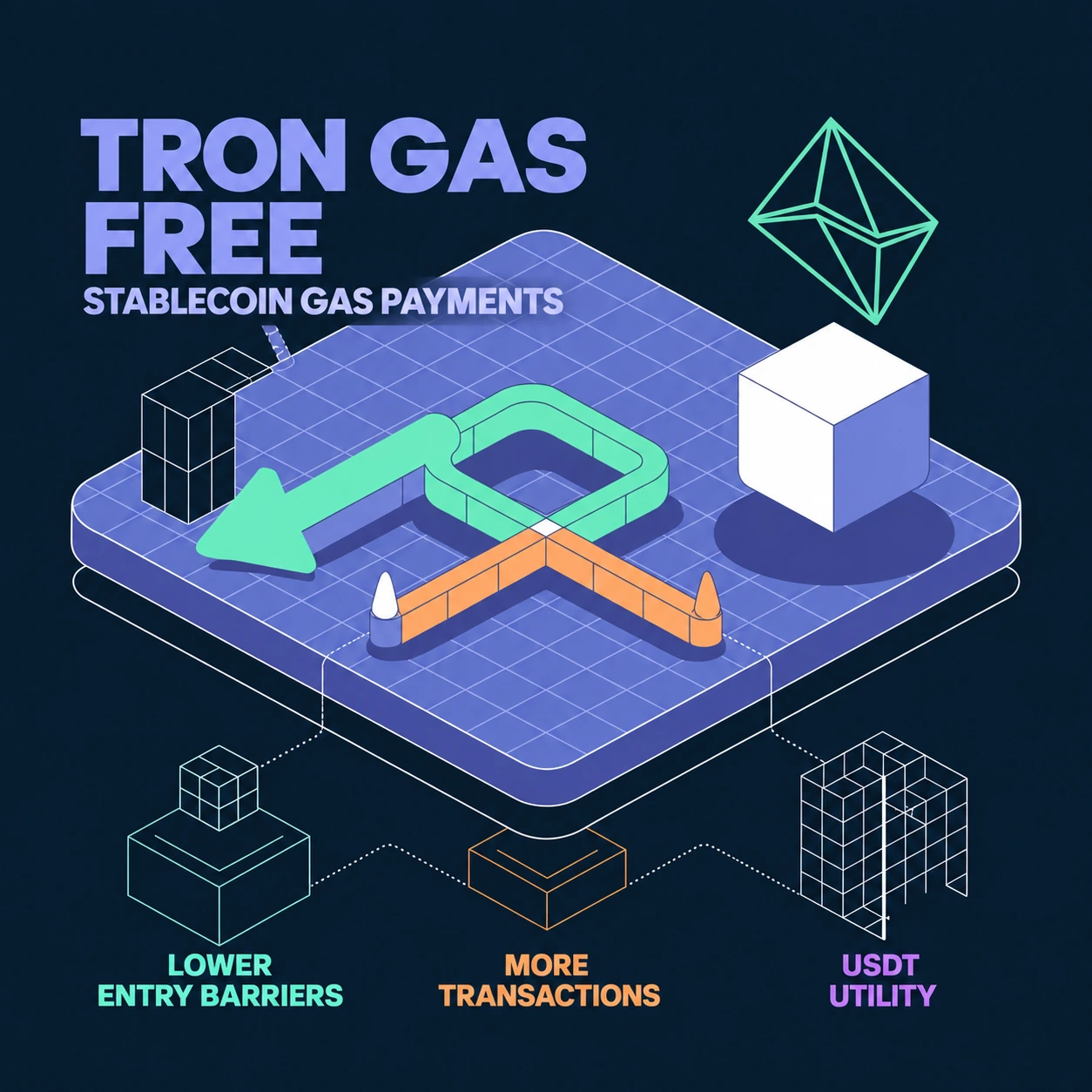
TRON recently introduced a feature allowing users to pay on-chain transaction gas fees directly with stablecoins such as USDT. The feature aims to simplify operations and bring more use cases and users to the TRON ecosystem. This article examines its motivation, ecosystem effects, and possible market changes.
1. Motivation and Goals
1.1 Lowering Barriers and Improving User Experience
The primary goal of stablecoin gas payments is to make TRON easier to use. Traditionally, users needed TRX to pay gas fees, which created a barrier for newcomers, particularly USDT holders. Allowing direct gas payments in stablecoins such as USDT simplifies the workflow and reduces the extra cost of acquiring TRX, lowering the barrier to joining the network.
USDT holders can participate in TRON transactions and applications more easily without converting assets. This is particularly attractive to existing USDT users and can expand TRON's user base.
1.2 Reinforcing TRON's Position as a Major USDT Network
TRON is the world's largest USDT issuance platform, with a market share above 50%. Allowing USDT gas payments strengthens this relationship and reinforces TRON's position as a main USDT network. The feature is convenient for USDT holders and creates more stablecoin payment scenarios, strengthening USDT's role as network “fuel.”
1.3 Innovating in a Competitive Market
As competition in DeFi and payments intensifies, other blockchain platforms, including Solana and BNB Chain, have begun introducing similar stablecoin gas payment features. TRON's move signals its intention to keep pace. Simplifying operations and expanding USDT's ecosystem role can help TRON maintain its competitive position in DeFi and cross-border payments.
Meanwhile, CatFee, an Energy rental platform and an important participant in the TRON ecosystem, provides convenient Energy delegation services. These simplify Energy purchasing, lower operational barriers, and help users complete on-chain activities smoothly.
2. Effects on the TRON Ecosystem
2.1 Positive Effects: More Transactions and Active Users
The feature is likely to encourage network activity and transaction volume. Without needing to hold TRX for gas, more USDT holders may join TRON and make frequent small transfers. Cross-border payments and reward distributions are examples of use cases requiring low-cost, high-frequency transactions.
This can generate more on-chain activity, enrich the ecosystem, and attract more developers and projects. Wallets, DeFi protocols, and other ecosystem projects can also promote the feature to improve their user experience.
2.2 Attracting Developers and Ecosystem Projects
Simpler payment flows make wallets and DeFi protocols more willing to integrate the feature, improving user retention and experience. By reducing friction, TRON projects can both attract more users and become more competitive.
2.3 Strengthening USDT's On-Chain Utility
USDT becomes more than an asset: it also acts as network “fuel.” Its widespread use strengthens TRON's stability and enables more use cases. For example, using USDT for DeFi staking or NFT payments can expand ecosystem activity and encourage further growth.
3. Potential Risks
3.1 Uncertain Short-Term Demand for TRX
Although stablecoin gas payments are supported, a feature fully subsidized by project teams, rather than funded through TRX conversion, could raise questions about TRX's ability to capture value. Whether TRX demand can be sustained remains an open question.
3.2 Centralization Risk from USDT Dependence
Tether's control over USDT could indirectly affect the TRON ecosystem's stability. Extreme measures, such as freezing addresses or changing policies, could negatively affect on-chain transactions. The ecosystem needs to remain aware of this potential centralization risk.
4. Effects on the TRX Price
4.1 Short-Term Effects: Possible Bearish Sentiment
Markets may initially interpret the feature as a sign that TRX is no longer necessary, leading speculative holders to sell. If Gas Free causes transaction volume on the TRX network to decline significantly, concerns about reduced demand could intensify and put pressure on TRX's price.
4.2 Long-Term Effects: The Demand Transfer Mechanism Matters
Over the longer term, ecosystem growth may increase demand for TRX. If project teams implement Gas Free by converting USDT into TRX to pay gas, for example automatically through on-chain contracts, TRX demand could recover and support its long-term value.
TRON's stablecoin gas payment feature is an important innovation for improving user experience and expanding market share. It may put pressure on short-term TRX demand, but continued ecosystem expansion and additional use cases mean TRX can retain an important network role.
For users operating on TRON, CatFee continues to provide stable, reliable Energy supplies and help manage and pay for Energy efficiently. Following the launch of Gas Free, CatFee will continue improving services to support smooth and secure transactions across the TRON network.